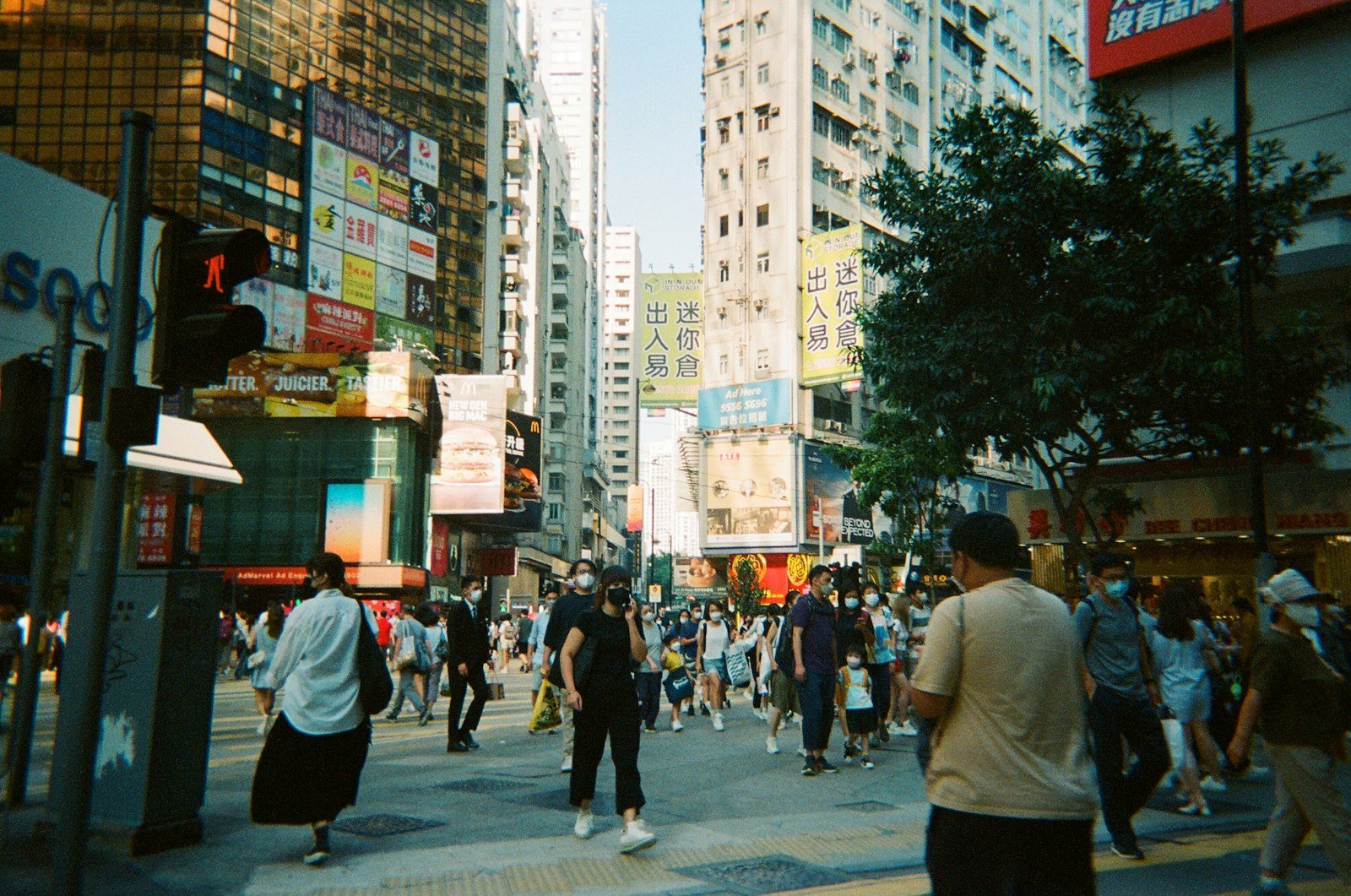
Photo by crystal (@emotionaltangerine) on Unsplash.
A composite portrait based on common experiences of OFWs in Hong Kong, not the story of one real person.
The alarm goes off earlier than it needs to. It is Sunday, the one day this domestic worker in Hong Kong belongs to nobody but herself, and she is not going to waste a minute of it in bed. There is rice to eat, a phone to charge, and a whole city of kababayan waiting in Central.
The morning that belongs to her
For many Filipino domestic workers in Hong Kong, Sunday is the weekly rest day. Weekdays are measured out in school runs, meals, laundry and other people’s routines, often in a small flat where there is little privacy. Sunday is different. She dresses up a little, packs her bag and heads out, perhaps first to Mass, since most Filipinos in Hong Kong are Catholic and many parishes offer services in English or Tagalog.
By mid-morning, the streets and footbridges of Central begin to fill. Some people call it “Little Manila”. Accounts of the scene describe parts of Chater Road closed to traffic on Sundays, and women spreading flattened cardboard boxes on the ground to make a place to sit, a kind of living room with no walls.
A living room with no walls
Then comes everything the week could not hold: homemade food shared out of plastic containers, card games, singing, nail-painting, hair-braiding, laughter that carries across the road. There are stalls and little side businesses, and parcels to organise. There are friends from the same province who see each other only here, once a week, and cousins of cousins meeting for the first time.
And the phone is never far. A video call to the kids back home, held up so the whole group can wave. A new baby shown around like a trophy. The small ache of seeing a school programme on a screen instead of from the second row.
The ber months in a foreign city
In the Philippines, Pasko starts early: the “ber” months bring parols and Christmas songs as soon as September arrives. Far from home, that early start matters. A string of lights, a carol on someone’s phone speaker, a plan for who will send which balikbayan box and by when: these are the small ways the season starts to feel real even when the weather is warm and the street signs are in Chinese.
Simbang Gabi is still weeks away, on 16 December, but on a Sunday like this, someone is sure to be talking about it. Who is going to the dawn Masses, who is cooking bibingka, and who is saving the day off for it.
Evening, and back
As the light drops, the cardboard gets folded and stacked, the containers go back into bags, and the crowds thin out. Hugs, “see you next week”, a last photo. Then the walk back to a flat that isn’t hers, carrying a lighter heart than she left with.
Sunday in Central is not a party and it isn’t a protest. It is a community quietly remaking home, one piece of cardboard at a time. If you’re one of the thousands who have sat on that cardboard: salamat, kabayan, for showing the rest of us what resilience looks like.
🔍 Where this comes from
- Wikipedia, “Filipinos in Hong Kong” — Sunday as a common rest day, the “Little Manila” gatherings in Central, and the mostly Catholic community.
- Next City, “After the Suits Leave, Another Hong Kong Economy Thrives” — flattened cardboard used as makeshift seating in Central on weekends.
- Rappler, first-person account of Sundays in Central — sections of Chater Road closed for the gatherings.
- CUHK Varsity, “Domestic helpers on holiday” — how the Central gatherings came about (an older piece, so details may have changed).
Everything here is an illustrative picture drawn from these reports, not a description of any real person. Do you have your own Sunday story to share? We’d love to hear it.
📬 Stay in the loop
Bookmark ofw-asia.com/blog/ and check back for more stories on Filipino life, culture and community.